01 / GH AXIS RESEARCH PEPTIDES

Ipamorelin: research overview

A selective ghrelin-receptor agonist and GH secretagogue — the most-studied compound on this desk, but with a Phase 2 trial that missed its endpoint and no approved indication anywhere.

The short version

Ipamorelin is a synthetic five-amino-acid peptide that triggers the pituitary gland to release a pulse of growth hormone (GH). It does this by binding the ghrelin receptor (GHS-R1a) — the same receptor that ghrelin, the hunger hormone, activates — but it was specifically engineered to stimulate GH release without the messy side signals that earlier compounds in the same class produced. In founding experiments it raised GH as potently as earlier peptides but did not significantly increase cortisol or prolactin, even at doses many times the threshold needed for GH release [6]. That selectivity profile is its defining pharmacological feature.

Here is the honest part. Ipamorelin has never been approved as a drug anywhere. Its only published Phase 2 human trial, run in patients recovering from bowel surgery, failed to reach its primary endpoint [3]. Most human data come from a small pharmacokinetics study in healthy volunteers [4]. Long-term safety in humans is uncharacterized. It is prohibited in sport by WADA. This page covers what was studied, in which species, and how far that evidence reliably extends.

What it is

Ipamorelin is a pentapeptide with the sequence Aib-His-D-2-Nal-D-Phe-Lys-NH2 (where Aib is alpha-aminoisobutyric acid). It was derived from an earlier GH-releasing peptide by removing a central two-amino-acid segment, and the specific amino acids chosen — particularly D-2-naphthylalanine and D-phenylalanine — confer resistance to protease degradation. It is catalogued under the research designation NNC 26-0161 and is sometimes called ipamorelin acetate in research contexts.

In terms of mechanism class, ipamorelin is a growth hormone secretagogue receptor agonist (GHS-R1a agonist). This places it in a different class from GHRH analogs like CJC-1295, sermorelin, and tesamorelin: those compounds bind the GHRH receptor on the pituitary; ipamorelin binds the ghrelin receptor. The two receptor pathways are complementary, which is the pharmacological basis for combining ipamorelin with a GHRH analog.

How it works

Ipamorelin binds GHS-R1a receptors expressed on anterior-pituitary somatotroph cells. Activation of this receptor triggers a GH pulse. The key pharmacological contrast with earlier GH-releasing peptides is selectivity: in the founding characterization, conducted in rat pituitary cells, anaesthetized rats, and conscious swine, ipamorelin produced GH release with a potency comparable to or exceeding GHRP-6 (swine ED50 ~2.3 nmol/kg vs 3.9 nmol/kg for GHRP-6), but ACTH and cortisol were not elevated even at doses more than 200-fold above the GH ED50 [6]. This absence of adrenocortical stimulation — a common liability of earlier GHRPs — is ipamorelin's signature.

GHS-R1a is also expressed in enteric and vagal neurons (gastric motility), pancreatic islet cells (insulin release), and hypothalamic appetite circuits. These secondary targets create several of the mechanistic cautions described below.

Pharmacokinetically, a human PK/PD study in healthy male volunteers (five 15-minute IV infusion doses of 4.21–140.45 nmol/kg) found dose-proportional kinetics, a terminal half-life of approximately 2 hours, and a discrete GH pulse peaking roughly 40 minutes after dosing [4]. Subcutaneous pharmacokinetics in humans have not been published.

What the research shows

Founding selectivity (rat, swine, in vitro, 1998). The landmark characterization of ipamorelin established its GH-selective pharmacology in rat pituitary cells and in conscious swine. GH was released potently; ACTH and cortisol were not meaningfully raised above GHRH-level controls, even at high multiples of the GH-effective dose [6].

Bone growth (adult female rats, 1999). Subcutaneous ipamorelin studied at 18, 90, and 450 micrograms per day (divided three times daily for 15 days) produced a dose-dependent increase in longitudinal bone growth rate in adult female rats — from 42 microns/day at vehicle to 52 microns/day at the highest studied level — without changes in total IGF-1 or bone turnover markers [5]. The study authors interpreted this as partly a local GH-pulse-driven skeletal effect rather than a purely IGF-1-mediated one.

Human pharmacokinetics (healthy men, 1999). A single-dose PK/PD study in healthy male volunteers characterized linear, dose-proportional pharmacokinetics with a terminal half-life of approximately 2 hours and a GH peak at roughly 40 minutes post-dose [4]. This remains one of the only published human ipamorelin datasets.

Phase 2 RCT — bowel resection (humans, 2014). The only published randomized controlled trial of ipamorelin enrolled 114 adults undergoing open or laparoscopic bowel resection. Patients received 0.03 mg/kg IV twice daily for up to 7 days. The primary endpoint — median time to first tolerated meal — was 25.3 hours with ipamorelin versus 32.6 hours with placebo (p=0.15), a result that did not reach statistical significance. Treatment-emergent adverse events occurred in 87.5% of the ipamorelin arm versus 94.8% of placebo [3]. The failure to meet the primary endpoint is the most clinically consequential published ipamorelin finding.

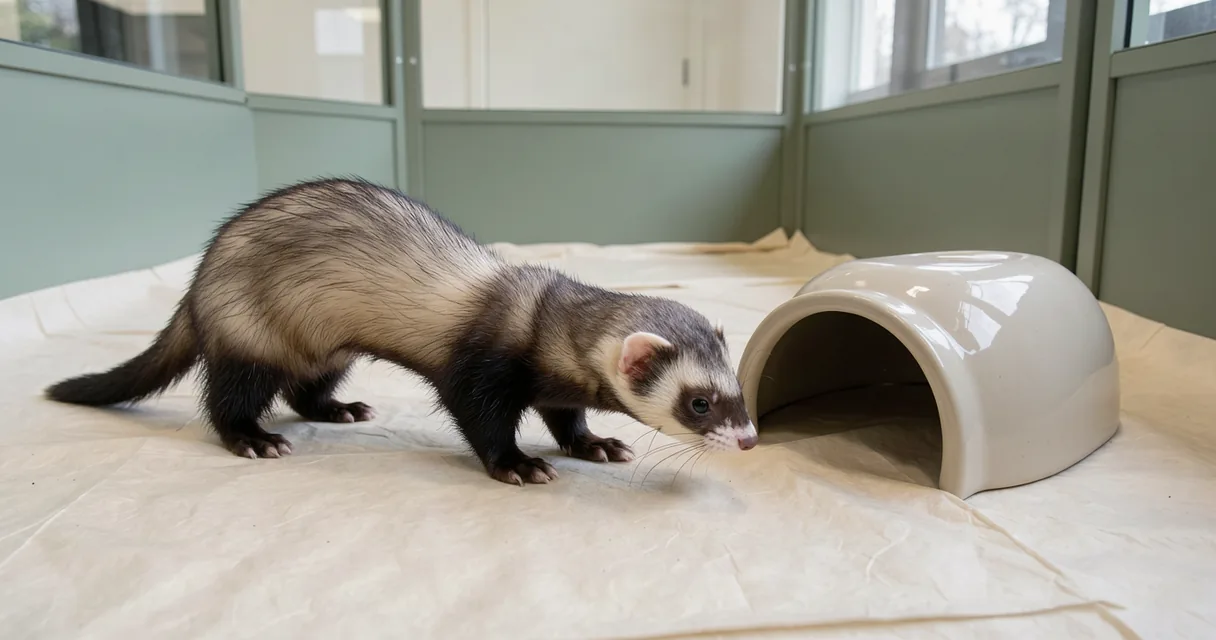
Anti-emesis / weight loss (ferret, 2024). The most recent published in-vivo ipamorelin study tested intraperitoneal ipamorelin at 1–3 mg/kg in a ferret model of cisplatin-induced weight loss and emesis. Ipamorelin inhibited chemotherapy-associated weight loss by approximately 24% on the last day of the delayed phase, but had no anti-emetic effect — in contrast to a central-acting comparator compound that reduced emesis [1]. The finding illustrates a peripheral mechanism for GH-axis-related weight effects.

Musculoskeletal narrative review (2026). A narrative review from USC Keck School of Medicine noted that CJC-1295 combined with ipamorelin improved maximal muscle tetanic tension in a murine glucocorticoid-induced muscle-loss model, but concluded that evidence is limited to animal studies and that safety and dosing data remain unknown, requiring significant further research before clinical recommendations [7]. This is not evidence of efficacy in humans.

Reported effects, cautions and safety

Anecdotal, not clinical evidence. The following are effects reported in research-use communities and consumer health write-ups — not findings from controlled human trials. They are described for informational completeness, not as validation of any effect.

Frequently reported benefits include: deeper and more restorative sleep (the most consistently cited community report, often appearing within one to two weeks of a pre-bed protocol); vivid dreams, especially in early weeks; faster recovery from training and reduced post-session soreness; and a gradual shift toward leaner body composition over weeks to months, described as subtle and highly variable.

Frequently reported adverse effects include: facial flushing and a warm head-rush appearing 5–15 minutes post-injection and lasting up to an hour; tingling or numbness in the hands and feet, particularly in early weeks; mild water retention and puffiness in fingers, ankles, or face; increased hunger (consistent with GHS-R1a class pharmacology, but generally described as milder than with less selective predecessors); and injection-site irritation — redness, itching, or mild swelling. Some users also report transient lightheadedness or dizziness after injection, and a perceived diminishing of effects (especially sleep benefits) after three to four months of continuous use.

Mechanistic and preclinical cautions. GH stimulates hepatic IGF-1 production; IGF-1 is a growth factor. A theoretical concern exists that chronically elevating GH-pulse amplitude could accelerate proliferative activity in pre-existing or occult tumors — this is a class-level, mechanistic concern, not an observed oncologic event in any ipamorelin study. GH is also a counter-regulatory hormone that can reduce insulin sensitivity; additionally, an ex vivo study found ipamorelin can directly stimulate insulin release from pancreatic islet cells [6], creating unpredictable net glycemic effects in individuals with insulin dysregulation. A 28-day chronic safety study of a different, structurally distinct GHS-R1a agonist found dose-dependent myocardial degeneration and necrosis in rats — a class-level cardiovascular signal for which no equivalent ipamorelin long-duration study exists [2].

Evidence gap. The only controlled human ipamorelin data are the Phase 2 RCT (up to 7 days IV, n=114) [3] and the acute PK/PD study (single-dose IV, n=8 per level) [4]. No Phase 3 trial has been conducted. Subcutaneous self-administration — the dominant real-world pattern — has no published pharmacokinetic or safety characterization in humans. Research-grade material lacks pharmaceutical quality assurance.

Where it fits

Ipamorelin occupies a specific niche in the GH-secretagogue literature: it was the first compound to demonstrate that potent, selective GH stimulation was achievable without meaningful cortisol or prolactin spillover [6]. That selectivity makes it the mechanistic anchor of the class studied here.

Its regulatory trajectory, however, was cut short. The compound was investigated for postoperative ileus and failed to show efficacy in the only Phase 2 trial [3]. No further development was reported. In 2024, the FDA reviewed ipamorelin acetate at the Pharmacy Compounding Advisory Committee and it is not an approved bulk substance for compounding. It is prohibited in sport at all times under WADA category S2.

The combination with a GHRH analog such as CJC-1295 or sermorelin is the context in which ipamorelin is most discussed in research-use communities, on the grounds that the two receptor pathways are complementary. That combination was not tested in any controlled human trial; the murine muscle-loss model reference [7] is the extent of published combination data.